

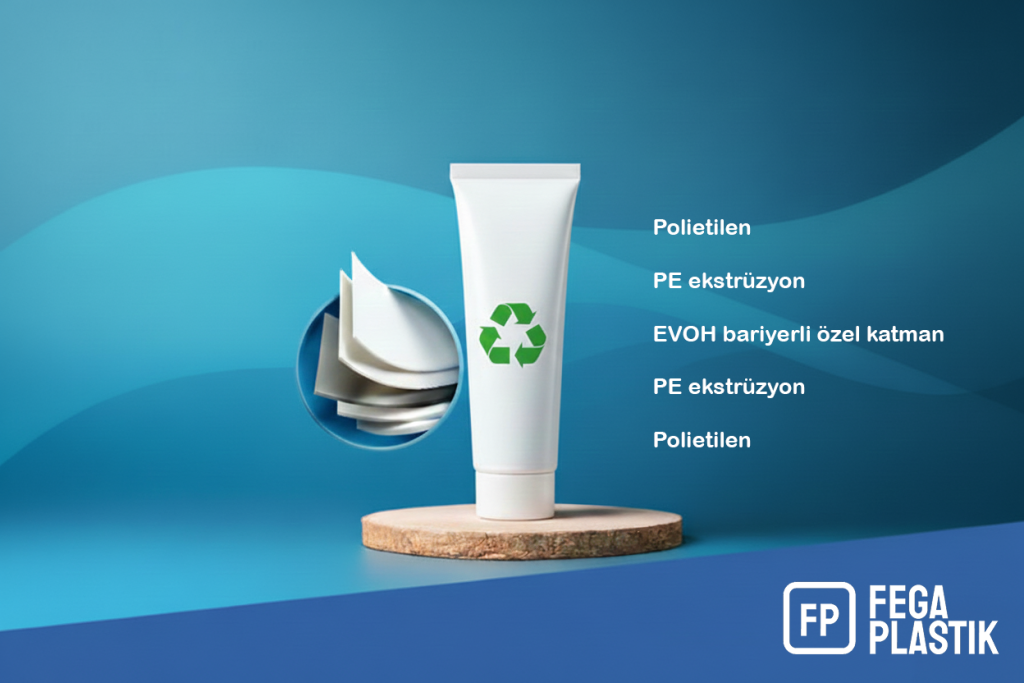
What is PBL (Plastic Barrier Laminate)? What Does It Do?
PBL (Plastic Barrier Laminate) is a laminated tube material composed entirely of plastic layers, offering flexibility, durability, and suitability for high-quality printing. The main difference from ABL (Aluminum Barrier Laminate) is that it contains no aluminum layers. This results in higher recyclability, making it an eco-friendly alternative.
Structure of PBL Tubes
PBL tubes feature a multi-layered plastic structure, typically consisting of the following components:
Outer Layer (LDPE or HDPE): Provides a printable, glossy, and aesthetic surface.
Middle Layer (EVOH or Nylon Barrier): The barrier layer that protects the product against the passage of oxygen, moisture, and odors.
Inner Layer (LDPE): The safe surface in direct contact with the product; suitable for food and cosmetic use.
The primary purpose of PBL laminated tubes is to protect the product from external factors while providing stylish and durable packaging. Since it achieves this with an entirely plastic structure, it is both environmentally friendly and efficient in terms of the production process.
Primary Functions
Protection: Prevents the passage of oxygen, moisture, and odors.
Aesthetics: High-quality graphics are achieved as printing can be applied directly to the outer layer.
Recyclability: Because they do not contain aluminum, PBL tubes can easily enter plastic recycling lines.
Flexibility: The soft, squeezable structure provides a comfortable user experience.
Common Applications
Cosmetics: Creams, lotions, shampoos, hair masks.
Food: Pastes, sauces, yogurt-based products.
Health: Vitamin gels, medical creams.
Home Products: Cleaning pastes, adhesives.
Key Features
100% plastic structure ensures recyclability.
Glossy and aesthetic appearance (advantageous for brands).
Lightweight and flexible.
No risk of corrosion (as it contains no metal).
High print quality and transparency options.